
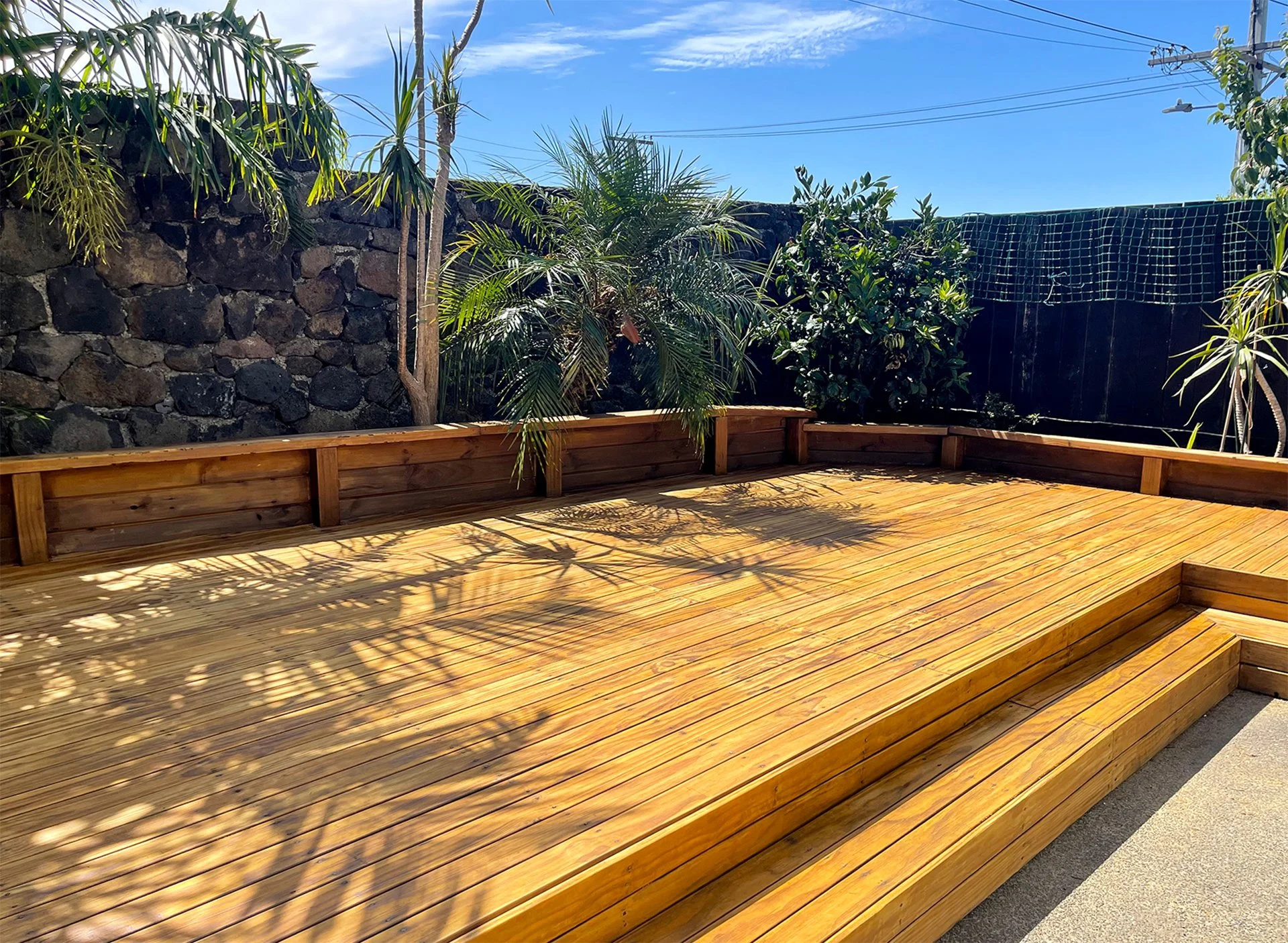
Timber brings warmth and character to your property. Whether it’s a deck, cedar cladding or an outdoor feature, maintaining its finish helps preserve its natural appearance and protect it from weathering.
A successful staining project starts with understanding the timber, its condition and any existing coating. Here are the key considerations before work begins.
Choose a finish suited to the surface
Colour matters, but it isn’t the only factor when selecting a stain.
The product needs to suit the timber and how it is used. A deck is a walked-on surface, while cedar cladding has different demands. An existing finish may also affect which products can be applied.
Choosing a compatible coating helps establish a practical maintenance approach for the years ahead.
Assess the existing stain
Previously stained timber needs to be checked before another coat goes on.
If the finish remains sound and is compatible with the proposed product, cleaning and preparation may be sufficient. If it is deteriorating, uneven or unsuitable for recoating, further preparation may be required.
Changing from one coating type to another should be assessed carefully rather than treated as a straightforward colour change.
Test your colour on the timber
The same stain can look different across timber types and existing finishes. Natural colour, grain and previous treatments all influence the result.
A sample on the actual surface gives a more useful indication than a colour chart alone. This is particularly helpful when changing colours or trying to achieve a consistent appearance across different timber features.
Give preparation proper attention
Dirt, organic growth and remnants of old coatings can affect the finished appearance and how a new stain performs.
Preparation should follow the selected product’s requirements. It may include cleaning, removing unsuitable coatings, sanding or arranging repairs.
Timber must also meet the product’s drying and moisture requirements before application begins.
Plan around suitable conditions
Staining needs appropriate weather and drying conditions. Rain, damp timber and unsuitable temperatures can affect the work.
The forecast helps with scheduling, but the surface condition and product instructions guide when application should proceed.
Drying times also vary. Follow the specified guidance before walking on a newly stained deck or returning furniture.
How often will the timber need restaining?
There is no universal maintenance interval. Timber type, coating choice, sunlight, weather exposure and foot traffic all influence how quickly the finish wears.
Decks may show wear differently from vertical cladding, while sheltered sections may age differently from exposed areas.
Regular inspections and the coating manufacturer’s care guidance help determine when cleaning or a maintenance coat is needed.
Maintain the character of your exterior timber
Staining enhances timber’s appearance, but it cannot repair structural damage or resolve decay. Those issues need attention before finishing work.
With suitable preparation, product selection and ongoing care, your deck, cedar cladding and other exterior timber can remain an attractive part of your property.
Smart Property provides deck and cedar staining in Auckland, including new timber staining, restaining and maintenance coats.
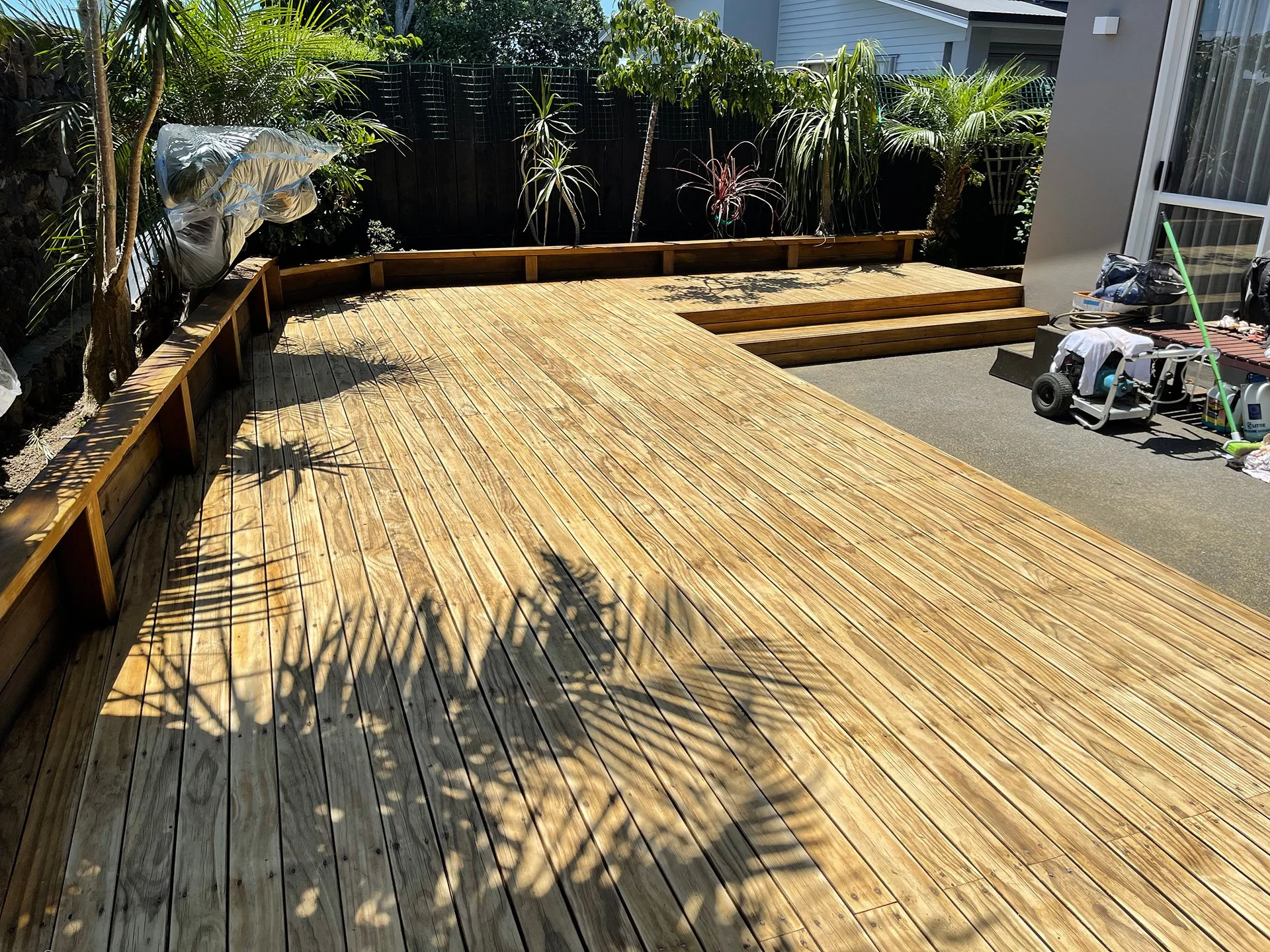
Contact Smart Property to discuss the right approach for your exterior timber.
